 white studio
Most Furniture Brands Don't Die From Bad Products. They Die From Bad Inventory Bets — And It Starts With The Photo Shoot.
By Vee S. · Founder, White Studio
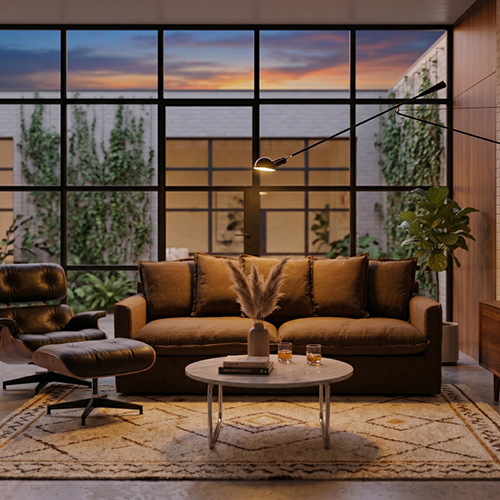
If you've been in furniture and home goods e-commerce for a while, you've probably noticed a pattern that doesn't get talked about enough: brands rarely fail because the product was wrong. They fail because they bet on the wrong inventory — the wrong style, the wrong quantity, the wrong hero shot — and they bet big, all at once, before the market ever told them what it actually wanted.
We run White Studio, and the more sellers we talk to, the more we've come to believe the root cause of a lot of that bad betting isn't a strategy problem at all. It's a photography problem. Specifically: professional product photography is expensive and slow enough that it quietly forces sellers into "go big or go home" inventory decisions before there's any real market data to justify them.
That sounds like a strange thing to blame on photos. Let's walk through why it's true.
How the traditional photo shoot pushes you into an all-or-nothing bet
Here's the flow most furniture sellers know all too well. You pick a new SKU, get a sample in from your factory or supplier, and book a studio shoot. For furniture and home goods, a single professional shoot — styling, lighting, a photographer, retouching — typically runs anywhere from several hundred to well over a thousand dollars per product, and that's before you factor in studio scheduling, which routinely adds a week or two before you even get final images back.
And getting the images back isn't the finish line. Amazon has its own image specs. Wayfair has different ones. TikTok Shop has different ones again. So the same raw shoot has to get handed to a designer who reformats every image, platform by platform — resizing, adding text overlays, exporting each variant separately. That's another round of back-and-forth, another few days of labor, another set of invoices.
Here's the part that matters: the cost of that shoot is fixed, whether you're testing a small batch or committing to a full production run. Which means a huge number of sellers end up making a decision that sounds a lot like this:
"We already spent $1,200 on the shoot and the sample's built — might as well order the full run, otherwise the shoot doesn't pay for itself."
That's sunk-cost bias, dressed up as a business decision. Instead of ordering a small batch, testing it in market, and then scaling based on real conversion data, sellers let the fixed cost of photography talk them into placing a bigger order than the data supports. And if that bet is wrong — wrong finish, wrong angle, wrong season, wrong anything — what's left over isn't a marketing problem. It's a warehouse full of stock that has to get marked down, liquidated, or written off entirely.
This isn't a theoretical problem, either. It shows up constantly in how furniture sellers actually talk about their launches: "we had to order 1,000 units to make the shoot worth it," or "we didn't have time to test a second style because the studio was already booked for three weeks out." Those aren't strategy statements. They're photography constraints wearing a strategy costume — and they're driving real production and purchasing decisions for a lot of brands that would never describe themselves as "photo-driven" companies.
The part everyone misses: it's not just capital, it's the odds of being wrong
Most people who think about this problem stop at "cheaper photography means less cash tied up in inventory." That's true, but it's not the real prize. The real prize is this: cheap, fast photography lowers the odds that you order the wrong stock in the first place.
Under the traditional model, photography is a one-shot, high-stakes investment. Because it's expensive and slow, you're forced to guess correctly — style, hero image, primary selling angle — before you've shot a single frame, and before the market has weighed in at all. Guess wrong, and the damage isn't "we'll reshoot it." The damage is a few hundred or a few thousand units of physical inventory sitting in a fulfillment center with no buyer.
That's the actual killer for a lot of small and mid-sized furniture brands. It's rarely that the traffic didn't show up or the product itself was bad. It's that the inventory decision got made under artificial time pressure and cost pressure created by the photo shoot — at exactly the moment the seller had the least amount of real information.
Once photography stops being a five-figure, multi-week bet, the whole decision sequence flips:
- You can test two or three different hero-image styles for the same SKU before committing to one direction.
- You can order a small batch, let real conversion data come in, and only then decide whether — and how much — to scale up.
- You can test different lead images across Amazon, Wayfair, and TikTok Shop separately, and let each platform tell you what actually converts there.
The dollars you save on the shoot itself are almost beside the point. What you're really buying back is the ability to be wrong cheaply, learn, and correct — instead of being wrong expensively, once, with a warehouse full of proof.
What we actually built
We started White Studio because we kept running into this exact problem ourselves, and we got tired of it.
Step one is the photography itself. With White Studio, you take one to three quick photos of your product on your phone — no lighting rig, no studio, no photography background required — upload them, choose a style, and get a full image set back within 24 hours. There are two tiers:
- Lite 4-Image Pack at $39 — 1 white-background shot, 2 lifestyle images, 1 detail, commercial use included. Built specifically for trying us out or testing a new SKU cheaply before you commit to anything.
- Standard 16-Image Pack at $99 — 4 white-background shots, 6 lifestyle scenes, 6 detail close-ups. The full set you'd use for an actual listing launch on Amazon, Wayfair, or your own site.
Product video: 25–30 seconds for $199, with AI-assisted footage and human editing. Order directly using 1–3 product photos; no image pack is required.
No studio booking. No waiting on a photographer's calendar. No back-and-forth with a stylist about props. Your phone is the entire input.
We're also building the next piece: a formatting tool that takes those images and auto-exports them into every size and layout each platform actually requires (Amazon's main image and A+ content specs, Wayfair's grid requirements, TikTok Shop's video-first thumbnails, and so on), so the redesign step disappears too. That piece isn't live yet, but it's coming — and it's built around the same principle: the tool that saves you the most money is the one that lets you make smaller, smarter bets, not the one that makes any single shoot cheaper in isolation.
The real math, side by side
Let's run the actual numbers for a single new SKU that needs to go live on, say, Amazon and Wayfair at the same time.
Traditional path: A studio shoot for a furniture piece typically runs $800–$1,500+ depending on complexity, with a 1–2 week turnaround before you even see proofs. After that, a designer reformats the shoot for each platform's specs — another half-day to a full day of labor. All-in, you're looking at $1,000+ and a lead time that's rarely under a week before every platform has what it needs — which, not coincidentally, is also the exact window in which most sellers are locking in their production order quantity.
White Studio path: $99 for the full Standard image pack, delivered in 24 hours.
Compare the total production cost and accepted delivery schedule for the actual scope. The larger business question is how much inventory you commit before learning from customers: say a seller, under the traditional model, feels pressure to justify a $1,200 shoot by ordering 1,000 units up front instead of testing with 200. If that first bet is even partially wrong — wrong finish, wrong image, wrong assumption about what customers want — and 30% of that run ends up marked down or liquidated, that's easily several thousand dollars in losses. That's multiples of what the photography itself cost, and it's damage that never would have happened if the seller had been free to test small first.
For a product line with several finishes, provide real references for each finish and order separate image packs. Use a small pack to check the visual direction before expanding to Standard. Agree the timing for a larger rollout separately; imagery can support a product test, while the demand decision still needs your own customer data.
Cheap, fast photography isn't a nice-to-have. It's how you avoid the mistake that actually kills furniture brands.
Inventory sitting in a warehouse or a fulfillment center is never a static number. It's an ongoing liability — storage fees accruing, markdowns waiting to happen, cash that isn't available for the next SKU you actually want to launch. And more often than people realize, the root cause traces straight back to a photography decision: the shoot was expensive, so the order had to be big enough to make the math work; the shoot was slow, so there was no time (or appetite) to test and iterate before committing.
We stopped running our own new-product launches the old way a while ago — no more studio bookings scheduled two weeks out, no more designers reformatting the same shoot five different ways for five different platforms. Once we stopped needing to over-order just to make a photo budget pencil out, we didn't go back.
We built White Studio specifically for sellers who don't have an in-house creative team and a dedicated photography budget line — the founder who's handling sourcing, listings, and customer service all at once, and doesn't have three weeks to spare on a studio shoot before finding out whether a product even sells. If that's you, the value isn't really "prettier photos." It's the ability to find out you're wrong for $39 instead of finding out you're wrong for $10,000 worth of unsold inventory.
If you're running product selection, listings, and launches largely on your own — whether you sell on Amazon, Wayfair, TikTok Shop, or your own site — this is worth trying.
- Lite Pack — $39 for 4 images · 24-hour delivery — best for testing a new SKU
- Standard Pack — $99 for 16 images · 24-hour delivery — best for a full listing launch