 white studio
Furniture Rendering Service
By Vee S. · Founder, White Studio
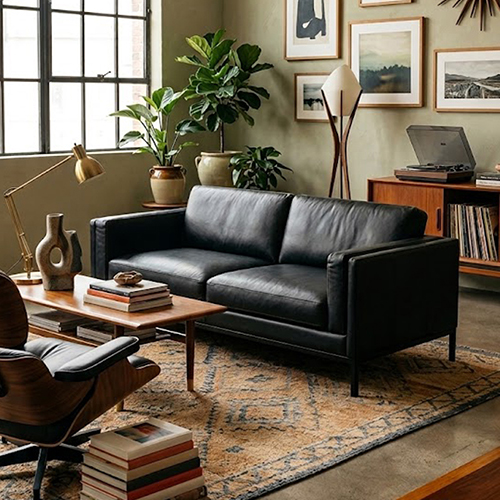
The phrase "furniture rendering service" covers a wide territory. To one vendor it means months of 3D modeling followed by offline ray-traced frames. To another it means generating photorealistic product scenes from a handful of smartphone photos in under a day. Both produce images that never saw a physical camera — yet they sit at different points on the cost, speed, and accuracy spectrum.
For e-commerce teams, the relevant question is practical: can a rendering approach deliver listing-ready visuals — white backgrounds, lifestyle scenes, detail crops — faster and cheaper than shipping sofas to a studio, without increasing returns from inaccurate representation?
This article explains how furniture rendering services work today, how they compare to traditional photography, where AI-assisted rendering fits, and what buyers should expect when commissioning rendered images for sofas, beds, tables, chairs, and cabinets.
What furniture rendering means in e-commerce
Rendering, in product visualization, is the process of creating images from digital data rather than captured light. Classical CGI builds three-dimensional models with explicit materials and lighting, then computes pixels. Modern AI-assisted rendering infers three-dimensional structure and surface properties from limited photographic input, then synthesizes new views and environments.
Both are furniture rendering services in the commercial sense: you receive image files suitable for Amazon, Wayfair, Shopify, and brand sites without a traditional photo shoot.
The distinction matters for procurement. CGI studios quote modeling plus rendering. AI-native platforms quote per product from phone photos. Capabilities overlap in output — hero shots on white, styled interiors, macro details — but not in prerequisites or timelines.
Classical CGI rendering workflow
Traditional furniture CGI begins with accurate geometry. Manufacturers with CAD files from industrial design have a head start. Others pay modeling studios to build meshes from drawings, samples, or manual measurement.
Typical stages include:
- Modeling. Create accurate dimensions, edge fillets, cushion volumes, and hardware details in 3D software.
- Materials. Author shaders for wood species, fabric weave, metal brushedness, glass transparency — often from physical swatch scanning.
- Lighting and cameras. Set studio lighting rigs or interior environments with physically based light sources.
- Rendering. Compute high-resolution frames; each frame may take minutes to hours depending on quality settings.
- Post-production. Composite passes, color grade, retouch imperfections.
Quality ceiling is high. Once a model exists, generating additional colors, angles, or room settings avoids reshooting physical inventory. The upfront modeling investment amortizes across many variants — ideal for manufacturers with stable frames and dozens of upholstery SKUs.
Barriers are equally clear: modeling cost and time, need for technical assets, dependency on skilled 3D artists, and slower iteration when designs change mid-season.
AI-assisted furniture rendering
AI-assisted rendering flips the entry requirement. Instead of a CAD file, you provide one to three smartphone photographs taken where the product already sits — warehouse, factory floor, or showroom. Algorithms estimate geometry and materials, then generate a standardized image set with art-directed QA.
Trade-offs are intuitive:
- Faster time-to-first-image. Hours instead of weeks.
- Lower upfront cost. No modeling fee before seeing output.
- Best for sellers without 3D assets who still need marketplace-ready packs.
Accuracy depends on input quality and product complexity. Standard sofas, beds, tables, and cabinets within supported categories perform well. Irregular sculptural pieces or heavily reflective surfaces may need additional angles or human retouching.
White Studio operates in this lane as a furniture rendering service for e-commerce listings: 16 images, 24-hour delivery, categories covering sofa, bed, table and chair, and cabinet. It is rendering in the outcome sense — pixels synthesized without a studio shoot — optimized for catalog velocity rather than cinematic CGI campaigns.
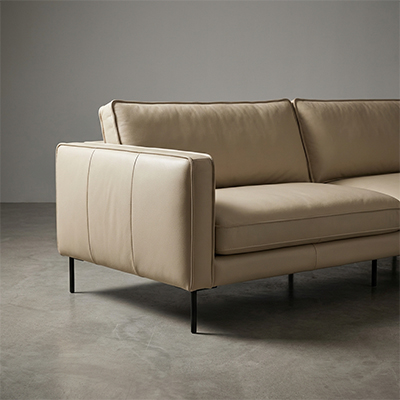
A delivered still built from photos of the physical product, with no 3D model required.
Comparing rendering to traditional photography
| Dimension | Traditional photo | Classical CGI | AI-assisted rendering |
|---|---|---|---|
| Initial setup | Low | High (modeling) | Low (phone photos) |
| Per-SKU marginal cost | High | Low after model exists | Low flat pack |
| Turnaround | Days–weeks | Weeks initially, then fast | 24 hours |
| Variant handling | Reshoot or heavy retouch | Material swaps on model | Re-run from new swatch photos |
| Texture fidelity | Excellent | Excellent if modeled well | Very good; edge cases vary |
| Physical sample required | Usually yes | Helpful for validation | No shipping required |
Rendering — CGI or AI — wins when physical access is expensive or slow. Photography wins when legal or brand requirements mandate capturing the exact unit. Hybrid strategies are common: model hero frames in CGI, render fabric variants; or use AI rendering for marketplace grids and photography for lookbooks.
Deliverables you should expect
Whether you hire a CGI studio or an AI-native furniture rendering service, clarify deliverables upfront. E-commerce furniture listings commonly require:
White-background images (typically three). Front and angled views with clean edges, sRGB color, sufficient resolution for zoom. Amazon main-image compliance often dictates pure white backgrounds and product fill ratios.
Lifestyle scenes (typically six). Interior contexts with believable scale — living spaces for upholstery, bedrooms for frames and mattresses, dining areas for tables and chairs. Lighting should feel photographic, not game-engine sterile.
Detail images (typically four). Material and construction close-ups supporting perceived quality and reducing returns.
Sixteen total images mirror what many sellers need for a complete gallery without juggling multiple vendors. White Studio packages these groups explicitly in its standard offer, avoiding the ambiguity of open-ended "rendering projects."
File format, naming, and color profile should be specified in writing. sRGB JPEG at 2000 pixels or more on the long edge remains a durable default for web and marketplace uploads.
Quality dimensions specific to furniture
Rendering criticism often cites the "CGI look" — overly perfect surfaces, unnatural repetitions in wood grain, floaty shadows. Furniture buyers are sensitive to these cues because they infer comfort and durability from imperfection levels.
Evaluate a furniture rendering service on:
- Silhouette accuracy. Does the rendered piece match reference dimensions and proportions?
- Material believability. Does fabric show appropriate nap and seam behavior? Does wood exhibit plausible variation without obvious tiling?
- Contact shadows. Do feet sit on floors rather than hover?
- Scale in scenes. Is the sofa appropriately sized relative to side tables and rugs?
- Consistency. Does a catalog of twenty products look like one brand system?
Request category-specific samples before bulk orders. Rendering a cabinet with glass doors differs technically from rendering an upholstered bed with tufting.
Human art direction catches errors automation misses — swapped leg styles, incorrect cushion counts, lifestyle props that obscure the product. Insist on QA beyond raw algorithmic output.
Cost structure and planning
Classical CGI pricing often bundles modeling, scene creation, and rendering hours. A single new SKU might cost thousands before the first pixel ships. Subsequent colorways cost less. Budgeting requires capital planning aligned with product development timelines.
AI-assisted furniture rendering services compress pricing into per-product packs. At a fixed pack price for 16 images in 24 hours, merchandisers treat rendering as a variable cost parallel to listing fees — scalable across seasonal drops without capital expenditure on 3D pipelines.
Calculate ROI with returns in mind. Under accurate rendering, fewer mismatched expectations mean fewer reverse logistics charges. Over-aggressive idealization increases returns even if click-through rises short term.
Turnaround and production scheduling
Rendering speed determines whether visualization keeps pace with inventory. Classical CGI tied to modeling schedules often lags factory production — unacceptable when Amazon listings must go live upon container arrival.
Twenty-four-hour SLAs align rendering with operational reality: photograph today, sell tomorrow. Even if not every vendor needs daily launches, removing week-long studio queues changes how teams plan email campaigns, paid social, and retailer submissions.
Build internal SOPs: who captures phone photos, which three angles are mandatory, how SKUs map to orders, where files land in DAM folders. Rendering services accelerate output; disorganized intake still creates bottlenecks.
Rights, usage, and channel compliance
Rendered images should carry commercial licenses covering:
- Brand website and retailer PDPs
- Marketplace uploads (Amazon, Wayfair, Walmart, etc.)
- Paid advertising and social organic posts
- Email and catalog PDFs
Some CGI contracts restrict usage by medium or duration. Read terms before rendering an entire catalog.
Channel compliance is equally critical. Amazon prohibits certain text and logo overlays on main images; Wayfair publishes dimension and quality standards. A furniture rendering service experienced in e-commerce delivers crops and backgrounds aligned to these rules, not merely beautiful art files.
When to choose a furniture rendering service
Rendering fits well when:
- Products are hard to ship to studios due to size, fragility, or international origin
- SKU proliferation outpaces physical shoot capacity
- You need consistent white-background grids across a large catalog
- Launch windows are measured in days, not months
- You lack in-house 3D teams but have warehouse access for phone capture
Rendering is less ideal when:
- Marketing requires hero campaign imagery with bespoke set design and talent
- Legal mandates exact-unit photographic evidence
- Products change shape weekly during prototyping — modeling churn may exceed photo churn unless AI photo-based rendering keeps pace
AI rendering vs investing in internal CGI
Large manufacturers sometimes internalize CGI for variant control. That investment pays off at high SKU depth with stable geometries. Smaller brands and marketplace sellers rarely amortize a full 3D team across occasional launches.
AI-assisted furniture rendering services function as outsourced visualization departments — no software licenses, no render farm maintenance, no hiring curve. You pay per listing, scale up during peaks, and redirect capital to inventory and ads.
Compare three-year TCO: salaries, software, hardware, versus per-pack fees multiplied by projected SKU count. Many mid-market sellers find outsourced AI rendering cheaper until catalog complexity justifies headcount.
Rendering agency vs curated AI pack: side by side
| Dimension | CGI rendering agency | Curated AI pack from photos |
|---|---|---|
| Primary input | 3D model (CAD or custom-built) | 1–3 real photographs |
| Physical product required | No | Yes, for source photos |
| Turnaround for a new SKU | Weeks, including modeling | About a day |
| Material variants | Excellent: swap materials in 3D | A new photo set per major variant |
| Lifestyle scenes | Fully custom CGI sets | AI-generated interiors around the real piece |
| Best for | Pre-production, many variants, CAD-rich teams | Live catalog, fast launches, distributed inventory |
Neither column wins every row. Most mature brands run a hybrid: rendering or a studio for hero campaigns and CAD-ready lines, a photo-based pack for catalog volume and new-SKU intake, and a re-shoot or re-render when the product changes. Keep a record of which SKU lives in which pipeline so you never pay twice for the same coverage.
Whichever vendor type you test, use the same discipline: pilot a representative SKU (not your easiest one), insist on an exact deliverable list, confirm commercial rights cover every channel you sell on, and check marketplace compliance before you judge beauty.
Working with White Studio as a rendering partner
White Studio positions itself at the intersection of rendering speed and furniture specificity. The workflow assumes real-world constraints: inventory in warehouses, launches imminent, budgets per SKU modest.
Upload one to three phone photos, choose sofa, bed, table and chair, or cabinet, and receive 16 rendered images within 24 hours — white backgrounds, lifestyle scenes, details. It is not a replacement for a six-week CGI modeling engagement on a sculptural showpiece; it is a production tool for e-commerce listings that need to look professional immediately.
Review the platform overview at What is White Studio?, then start a project with a pilot SKU to validate quality against your standards.
Future direction
Rendering technology continues to converge. AI pipelines ingest better geometry cues; classical CGI adopts faster realtime engines; hybrid tools retopologize photos into editable meshes. For furniture e-commerce buyers, the trend line favors lower friction intake and shorter SLAs without sacrificing marketplace compliance.
Teams that treat rendering as a core competency — clear intake, QA rubrics, channel-specific exports — will outpace competitors still scheduling quarterly studio weeks for catalogs that change monthly.
Conclusion
A furniture rendering service today might mean classical CGI, AI synthesis from phone photos, or a blend. The right choice depends on whether you optimize for modeling precision, launch speed, or campaign artistry.
For listing-scale production across standard furniture categories, AI-assisted rendering with human QA offers a compelling balance: no sample shipping, predictable fixed-price packs, 16 images, 24-hour turnaround. That is fast enough for modern commerce and structured enough for professional galleries.
Evaluate any provider with a pilot product, compare outputs to physical references, and confirm licensing plus marketplace fit. When the results match your accuracy bar, scale the pipeline across your catalog and redirect studio budget toward the hero moments that truly require a physical set.
Start your order when you are ready to test rendered furniture imagery on a live SKU — or read What is White Studio? for deeper process documentation before you commit.