 white studio
Virtual Staging for Furniture Brands: Digital Showrooms at Catalog Scale
By Vee S. · Founder, White Studio
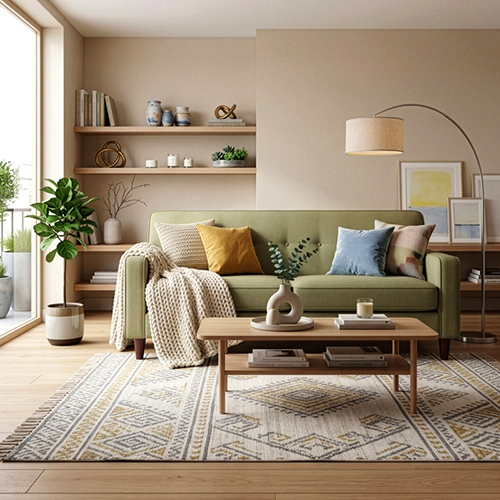
The term "virtual staging" entered the furniture industry through real estate — digitally inserting couches and dining sets into photographs of empty apartments. Furniture brands quickly recognized the underlying value: presenting products in context drives sales. But real estate virtual staging was never designed for furniture e-commerce. It inserts generic furniture into real rooms. Furniture brands need the opposite — their specific products placed in generated environments.
Virtual staging for furniture brands is a distinct discipline. It starts with your inventory, preserves your product identity, and generates the interior contexts that help customers buy. Done at catalog scale, it replaces the physical showroom and room-set photography that traditionally consumed the largest line item in a furniture brand's marketing budget.
This article explains virtual staging specifically for furniture brands, how it differs from real estate virtual staging, what output to expect, and how White Studio delivers six virtual staging scenes per SKU from 1–3 smartphone photos in 24 hours.
Virtual Staging: Two Different Applications
The same term covers two fundamentally different workflows:
Real estate virtual staging. A photographer captures an empty room. A staging service digitally inserts furniture — often from a stock library — to help potential buyers or renters visualize the space furnished. The room is the product being marketed. The furniture is decorative context.
Furniture brand virtual staging. A brand photographs its physical product. An AI platform generates interior environments and places the actual product into those environments with correct scale, lighting, and perspective. The furniture is the product being marketed. The room is generated context.
If you sell furniture, you need furniture brand virtual staging. Real estate virtual staging tools insert generic sofas into real apartments. Furniture brand virtual staging inserts your specific sofa into generated living rooms. The product fidelity, output format, and workflow requirements are entirely different.
Understanding this distinction prevents furniture brands from adopting real estate tools that cannot preserve product identity or produce e-commerce-ready image packages.
Why Furniture Brands Need Virtual Staging
Physical showrooms and room-set photography have been the standard for furniture presentation for decades. They work — but they scale poorly.
Showroom economics. A physical showroom costs rent, staffing, inventory allocation, and maintenance. Each additional product displayed consumes floor space that could generate revenue. Brands with 500+ SKUs cannot show every product in every configuration in a physical space.
Room-set photography economics. Building a styled room set for photography costs $2,000–$10,000+ per setup. Photographing one product per set is standard. Photographing 50 products means 50 room builds or complex swap-out scheduling that extends shoot days and increases cost.
Speed constraints. A new collection launch requires staged imagery before products arrive at showrooms. Physical staging cannot begin until products are physically present and transported to the staging location.
Variant multiplication. A dining table in three wood finishes and two size options is six SKUs. Physical staging each variant means six separate staging sessions or complex compositing. Virtual staging processes each variant from a single reference photo.
Geographic limitations. A brand selling across North America, Europe, and Asia needs staging contexts that resonate in each market. Building physical sets in multiple regions multiplies cost further.
Virtual staging for furniture brands addresses all five constraints: unlimited product display, per-SKU staging at flat cost, staging before physical product availability, efficient variant handling, and market-specific environment generation from the same source photos.
How Virtual Staging Works for Furniture Brands
Step 1: Product Photography
The brand photographs its physical product — 1–3 images with a smartphone, taken in a warehouse, factory, or showroom. No staging, no styling, no professional equipment. The product should be fully visible, in focus, with even lighting and a relatively plain background.
This step is the only physical production required. Everything that follows is digital.
Step 2: Product Isolation and Enhancement
AI models segment the product from its background, normalize lighting to studio quality, and preserve material textures. The product representation extracted from your photos becomes the fixed anchor for all virtual staging — the AI will not alter your product's geometry, color, or material identity.
Step 3: Environment Generation
The platform generates interior environments matching the brand's selected style direction:
- Clean Modern — bright, minimal spaces with neutral palettes and clean lines
- Mid-Century — warm tones, organic shapes, period-appropriate architectural details
- Contemporary — bold contrasts, current design trends, architectural interest
Each environment includes walls, floors, windows, lighting, and complementary decor appropriate to the style. The environments are generated, not photographed — no physical room sets required.
Step 4: Product Placement and Integration
The product is placed into each generated environment with:
- Correct perspective alignment with the room's geometry
- Accurate scale relative to architectural features (doors, windows, ceiling height)
- Lighting harmonization between product and environment
- Natural contact shadows and ambient occlusion
- Seamless edge blending at product-environment boundaries
Step 5: Multi-Scene Production
A complete virtual staging package includes multiple environments per product — different room types, angles, and styling contexts. White Studio produces 6 virtual staging scenes per SKU, plus 4 white-background catalog shots and 6 detail close-ups, for a total of 16 images.
Step 6: Quality Review
Human reviewers inspect each staged image for product fidelity, perspective accuracy, scene coherence, and commercial quality before delivery.
What Virtual Staging Output Looks Like
For each SKU, a furniture brand virtual staging package should include:
White-background catalog shots (3). Pure white backgrounds with natural shadows for Amazon, Wayfair, and marketplace compliance. Front, angle, and alternate views.
Virtual staging lifestyle scenes (6). The product placed in styled interior environments across multiple room settings. These are the images that drive conversion on brand storefronts, social media, and advertising.
Detail close-ups (4). Material, craftsmanship, and hardware highlights cropped and enhanced from the source photo.
This 16-image structure maps to e-commerce best practices: compliant catalog shots for discovery, lifestyle context for conversion, and detail views for purchase confidence.
White Studio delivers this complete package in 24 hours from 1–3 phone photos.
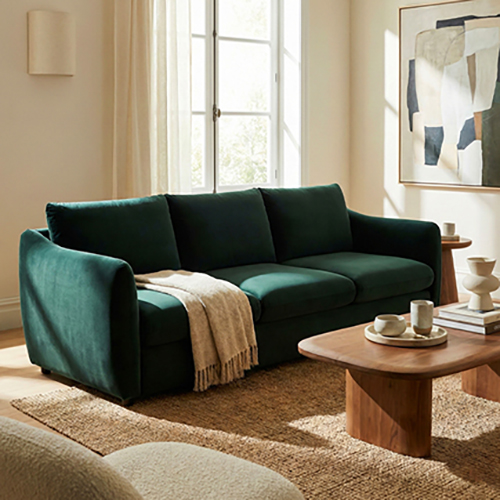
A delivered lifestyle still: the staging changes the room, not the product.
Virtual Staging vs. Physical Showroom Staging
| Dimension | Physical Showroom Staging | Virtual Staging for Furniture Brands |
|---|---|---|
| Capacity | Limited by floor space | Unlimited SKUs |
| Cost per product | Rent + inventory allocation + maintenance | $99 flat |
| Setup time | Days to weeks per display | 24 hours per SKU |
| Variant display | One variant per floor position | Every variant staged independently |
| Market adaptation | One physical location per market | Region-specific scenes from same photos |
| Seasonal refresh | Physical re-styling required | Regenerate with updated style |
| Pre-launch staging | Requires physical product on site | Stage from warehouse photos before launch |
Physical showrooms retain value for tactile customer experiences — sitting on a sofa, opening drawers, feeling fabric. Virtual staging handles the digital presentation layer that reaches the 90%+ of customers who shop online before (or instead of) visiting a showroom.
Virtual Staging vs. Real Estate Virtual Staging
| Dimension | Real Estate Virtual Staging | Furniture Brand Virtual Staging |
|---|---|---|
| Subject | The room (property for sale) | The furniture (product for sale) |
| Product source | Generic stock furniture | Your actual inventory |
| Product fidelity | Approximate style match | Exact product preservation |
| Output | 1–3 room views | 16-image e-commerce package |
| Detail shots | Not included | 6 detail close-ups included |
| White backgrounds | Not applicable | 4 catalog shots included |
| Workflow | Agent uploads room photo | Brand uploads product photo |
Furniture brands evaluating virtual staging should verify that the platform starts with their product (not a room), preserves product identity (not generic substitutes), and produces complete e-commerce packages (not single room views).
Use Cases for Furniture Brand Virtual Staging
Digital showroom. Present your entire catalog in styled environments without physical floor space limitations. Every SKU, every variant, every configuration — virtually staged and ready for online browsing.
Pre-launch marketing. Stage products from factory or warehouse photos before they reach showrooms. Build product pages, email campaigns, and ad creative ahead of physical availability.
Marketplace presence. Amazon and Wayfair listings with virtual staging lifestyle images alongside white-background primaries outperform white-only listings on click-through and conversion.
DTC storefront galleries. Shopify and brand websites with full lifestyle galleries for every product communicate brand quality and help customers visualize purchases.
Social media content. Virtually staged scenes provide a continuous content pipeline for Instagram, Pinterest, and Facebook without ongoing photo production.
Paid advertising creative. Lifestyle staged images for Facebook, Google, and Pinterest ads, generated from the same source photos as catalog imagery.
Collection campaigns. Show coordinated furniture collections in matching virtual environments without building multiple physical room sets.
International presentation. Generate staging scenes with culturally appropriate interior styles for different markets — Scandinavian for Nordic, warm traditional for Mediterranean, minimalist for East Asian markets.
Style direction and brand alignment
Staging is only an asset if it looks like your brand, consistently. Most furniture catalogs fit one of three directions:
- Clean Modern — minimal rooms, neutral palettes, bright natural light. Suits contemporary and Scandinavian-leaning brands.
- Mid-Century — warm wood tones, organic shapes, period-appropriate styling. Suits heritage and design-led brands.
- Contemporary — bolder contrast and architectural interest. Suits fashion-forward and urban brands.
Pick one direction per collection and hold it. The same lighting quality and level of polish across every SKU is what makes a catalog read as one brand instead of a folder of experiments. Review staged output for product accuracy, scene realism, scale, lighting coherence, shadow quality, detail fidelity, and whether the gallery covers catalog, lifestyle, and detail images.
Measuring Virtual Staging ROI
Virtual staging ROI for furniture brands is measurable across several dimensions:
Cost per product. White Studio’s Standard pack is $99 for one product and one selected style. Larger catalogs need a separate production schedule and scope; compare like-for-like asset counts before estimating savings.
Time to market. Virtual staging: 24 hours per SKU. Physical staging: 2–6 weeks per shoot cycle. Faster staging means faster listing, faster indexing, faster revenue.
Commercial impact. Room scenes can help explain context and scale. Measure how your own audience responds; a visual package does not guarantee a conversion lift.
Return rate reduction. Customers who see products in context before purchasing return less frequently. Reduced returns save logistics costs and protect margin.
Catalog completeness. Brands with complete visual catalogs for every SKU capture sales that incomplete catalogs lose to competitors with better product presentation.
Preparing Products for Virtual Staging
Maximize virtual staging quality with these source photo practices:
- Photograph in even, diffused light — avoid harsh shadows and direct sunlight
- Use a plain or contrasting background — walls, floors, or backdrops that separate cleanly from the product
- Capture 1–3 angles — front, three-quarter, and side or configuration view
- Ensure full product visibility — entire piece in frame, in focus, unobstructed
- Smartphone quality is sufficient — no professional camera required
Products photographed in warehouses, factories, and showrooms produce excellent virtual staging results when these guidelines are followed.
Limitations
Virtual staging for furniture brands is a catalog presentation tool with defined boundaries:
- Input quality determines output quality. Very poor source photos produce weaker staging results.
- Transparent and reflective materials remain challenging for all virtual staging platforms.
- Furniture categories only. Furniture-focused services may not perform well on other product types.
- Still images. Virtual staging produces photographs, not video walkthroughs or AR experiences.
- Campaign creative. Bespoke advertising art direction may still require traditional creative production.
Within these boundaries, virtual staging handles the core presentation requirement for furniture e-commerce: every SKU, staged professionally, delivered fast, at catalog scale.
Getting Started
Virtual staging your furniture catalog:
- Photograph products with a smartphone — 1–3 angles per SKU
- Upload to White Studio and select style direction
- Receive 16 virtually staged images per SKU within 24 hours
- Deploy across all sales and marketing channels
Supported categories: sofas, beds, tables and chairs, cabinets. Style options: Clean Modern, Mid-Century, Contemporary.
For a comprehensive platform overview, read What is White Studio?.
Conclusion
Virtual staging for furniture brands is not real estate virtual staging repurposed. It is a purpose-built production capability that places your actual products in AI-generated interior environments — delivering the lifestyle imagery that drives online furniture sales without physical showrooms, room sets, or studio budgets.
Six virtual staging scenes. Four white-background catalog shots. Six detail close-ups. Twenty-four hours. $99. From one to three phone photos.
That is a digital showroom that scales with your catalog, not with your real estate budget.
Ready to virtually stage your catalog? Start your project — 16 images, delivered within 24 hours.