 white studio
Furniture Product Image Service: What’s in a Listing Pack (White, Lifestyle, Details)
By Vee S. · Founder, White Studio
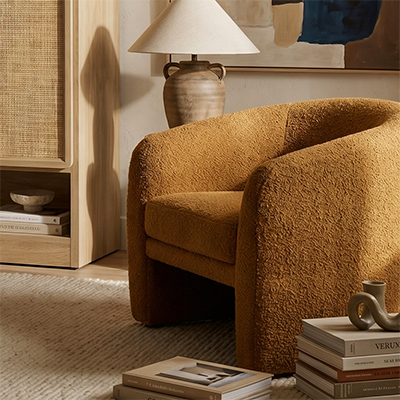
A furniture product image service turns physical inventory into structured listing assets—typically white (or silo) heroes, lifestyle/room scenes, and detail/feature crops—so marketplaces and DTC PDPs answer scale, material, and room-fit. Exact counts vary by channel, but packs that cover those three types convert better than a single hero shot. White Studio delivers designer-curated packs from 1–3 real product photos (Lite $39 / Standard $99) in 24 hours via image-to-image—so the SKU you ship matches the gallery you publish.
Every furniture listing begins with a visual question: can a stranger online understand what this product is, how big it is, and whether it belongs in their home? Text specifications help—dimensions, materials, weight—but conversion still hinges on images. Unlike generic product photography, furniture introduces logistical and creative constraints that shape how services operate. Pieces are heavy. Showrooms are expensive. SKUs multiply by finish and fabric. Launch windows are tight.
This guide covers deliverable anatomy and pack economics—what you get, how Lite maps vs Standard, category notes, QA, and channel handoff. For “how to choose among studios / CGI / curated AI,” see best furniture photography service. To see the packs themselves, go to furniture product images or AI furniture photography.
The role of product images in furniture ecommerce
Furniture purchases sit high on the risk spectrum for online shoppers. Buyers cannot sit on cushions, open drawers, or judge stability through a screen. They infer quality from visual cues: stitch consistency, wood tone, metal finish, proportional balance in a room setting.
Image quality links to measurable outcomes—higher click-through on marketplace search, longer time on product pages, lower return rates when expectations match delivery. For furniture specifically, returns are costly due to shipping weight and restocking complexity. Accurate product images are not a marketing luxury; they are operational infrastructure.
A furniture product image service therefore targets more than aesthetics. It produces decision-enabling assets: views that satisfy platform compliance, clarify scale, showcase materials, and maintain catalog-wide consistency so a brand looks trustworthy across fifty listings, not just one hero product.
What does a furniture product image service include?
While exact counts vary, professional furniture listings converge on a standard bundle. Understanding these components helps you evaluate whether a service truly delivers “full coverage” or a stripped-down subset.
White-background images
Pure white or neutral seamless backgrounds serve three purposes. They meet strict marketplace main-image rules (particularly on Amazon). They eliminate visual competition so the product reads clearly at thumbnail size. They allow retailers to composite products into their own marketing templates.
For large pieces—sectionals, king beds, dining tables—framing matters as much as background. The product should occupy sufficient frame area without awkward cropping of legs or arms. A competent furniture product image service knows category-default angles: three-quarter front for sofas, head-on for bed frames, elevated slight angle for dining tables.
Lifestyle or in-scene images
Context images help buyers imagine ownership. A sofa in a living room with coherent scale. A bed styled with neutral bedding in a bright bedroom. A cabinet anchored against a wall with decor that suggests use without cluttering the product.
Lifestyle photography traditionally required physical sets, prop inventories, and half-day studio time per scene. Modern services, including curated AI platforms, generate scenes from libraries tuned to furniture proportions. The best results balance realism with brand tone—clean modern, mid-century, contemporary—without misleading scale.
Detail and feature images
Close crops reduce uncertainty. Fabric texture, wood grain direction, hardware finish, drawer glide mechanisms, edge banding, tufting depth—these details answer tacit buyer questions. Detail shots also support premium positioning by signaling craft.
Six detail images in a standard sixteen-image pack, balanced against four white-background and six lifestyle views, maps well to common marketplace upload slots and on-page gallery design.
Pack map: Lite vs Standard
| Lite $39 | Standard $99 | |
|---|---|---|
| Images | 4 | 16 (4 white / 6 lifestyle / 6 detail) |
| Shot coverage | Fidelity mix—white hero, lifestyle and one detail | Full listing set across white + lifestyle + details |
| Best for | Test one SKU against the physical sample | Fill a gallery for Shopify / Amazon / Wayfair launch |
| Turnaround | 24 hours | 24 hours |
| Intake | 1–3 real phone/warehouse photos | Same |
| Process | Image-to-image + designer curation | Same |
| Product video: 25–30 seconds for $199, with AI-assisted footage and human editing. Order directly using 1–3 product photos; no image pack is required. |
How to read the map: Lite is a low-risk quality gate—“does this look like my sofa?” Standard is listing readiness—“do I have a complete gallery?” Neither number is a marketplace-mandated count; both are production packs you map to the slots your channel actually requires. Pricing detail: /pricing.
Validate pack quality on one SKU with Lite at $39. Next: furniture product images · cases · order.
Traditional vs modern service workflows
Historically, a furniture product image service meant booking a studio, transporting products, and waiting for retouching. That model persists for campaign-grade work. Operationally, it creates friction:
- Freight cost and damage risk for large items
- Scheduling coordination across warehouse, studio, and merchandising teams
- Per-day studio economics that discourage small batch shoots
- Long revision cycles when a color or angle misses approval
Modern alternatives compress the chain. Phone-photo intake accepts one to three images captured on-site—factory, warehouse, or showroom—and processes them through AI reconstruction plus human art direction. Output arrives in hours, not weeks.
White Studio exemplifies this pack-shaped model for furniture specifically: upload smartphone photos, select category (sofa, bed, table and chair, cabinet), and receive listing-ready images within twenty-four hours. Differentiator in one line: image-to-image from real photos + designer curation—catalog-true vs text-to-image inventions or cutout-only apps. For how the process works, read what is AI furniture photography. Service overview: AI furniture photography.
Both workflows remain valid. Choosing between them is a question of SKU velocity, budget per listing, and whether physical samples are available locally. For provider-model evaluation (studio vs CGI vs curated AI), see best furniture photography service.
Category-specific considerations
Furniture is not monolithic. A service that excels on dining chairs may stumble on sleeper sofas if it lacks category rules.
Sofas and sectionals
Challenges include overall width, cushion asymmetry, modular configurations, and low-angle leg visibility. Images must communicate seating depth and arm height without wide-angle distortion that shrinks the piece.
Beds and bed frames
Headboard proportion relative to mattress size, slat visibility, under-bed clearance, and footboard detail matter. Lifestyle scenes should use standard mattress sizing cues so buyers infer correct scale.
Tables and chairs
Height relationships between seated and standing pieces affect dining sets. Tabletop material reflection must be controlled—overly glossy CGI or HDR looks artificial. Chair backs and leg structures need clear silhouette reads.
Cabinets and storage
Doors open or closed? Interior shelving visibility? Hardware placement? Buyers want functional clarity. White-background shots often need straight-on and slight angle views to show depth.
A furniture product image service should expose category selection at intake so rendering logic matches product type. Generic “furniture” tags produce generic—sometimes wrong—results.
Pricing transparency and unit economics
Opaque pricing dominates traditional photography—custom quotes, day rates, retouching add-ons. That works for bespoke projects but complicates catalog planning.
Fixed per-SKU packs change forecasting. If every product costs a known constant within supported categories (Lite $39 to prove fidelity; Standard $99 for a full set), merchandising teams multiply launch plans without waiting on custom quotes. Combined with 24-hour delivery, cash flow and listing schedules align.
Compare against internal fully loaded costs: employee time to coordinate shoots, shipping, studio fees, retouching, and delayed revenue from late listings. A furniture product image service with flat pack pricing often wins on total cost for high-churn catalogs even if per-image artisanal quality is lower than a flagship studio shoot.
Ask about revisions, re-renders for color correction, and licensing for ads. Surprises in those line items erode the simplicity of headline pricing. Commercial rights: /faq.
Quality assurance and accuracy
Speed and price mean little if images misrepresent products. Returns erode margin faster than photography saves cost.
Quality assurance for furniture product images should cover:
- Proportional accuracy. Leg length, seat height, and headboard scale match supplied references.
- Material fidelity. Wood tone, fabric color, and metal finish align with swatches within reasonable sRGB display limits.
- Edge integrity. Clean masking on white backgrounds without halos or clipped details.
- Scene scale. Lifestyle placements that do not make a three-seat sofa look like a loveseat or dwarf adjacent furniture absurdly.
- Consistency. Similar lighting and crop logic across a catalog.
Human review remains essential in AI-assisted pipelines. Fully automated generation drifts on unusual silhouettes. White Studio’s combination of AI generation and art direction targets the error modes most common in furniture—asymmetric cushions, mixed materials, complex legs.
Run a pilot SKU before bulk commitment. Compare delivered files against physical samples under neutral lighting. Lite ($39) exists for exactly that gate.
Integration with sales channels
A furniture product image service creates assets; your ops team deploys them. Smooth handoff requires:
- Resolution suitable for zoom on DTC product pages (typically 2000px+ longest edge)
- sRGB color space for web consistency
- JPEG masters with manageable file size for marketplace uploads
- Aspect ratios safe for cropping into platform templates
Amazon, Wayfair, Shopify, and Google Merchant Center each publish image guidelines that change periodically. Services immersed in furniture ecommerce adapt exports proactively; generalist photographers may deliver beautiful files that fail automated compliance checks.
Useful siblings: Shopify furniture product images, Amazon furniture product images requirements, white-background furniture photos.
If you sell across multiple channels, confirm usage rights cover all destinations without incremental fees—see /faq. Shopify sellers can start from /order.
When to use a furniture product image service
Strong fit scenarios include:
- New marketplace expansion requiring dozens of compliant listings quickly
- Factory-direct brands photographing inventory before samples ship internationally
- Seasonal fabric updates on existing frames where reshooting every swatch is prohibitive
- Warehouse-clearance or closeout velocity where photography cost must stay below margin
- DTC launches validating demand before investing in flagship studio production
Weaker fit scenarios include flagship brand campaigns requiring bespoke art direction, products with legal requirements for exact-unit photography, or categories outside supported furniture types.
Building a sustainable visual pipeline
Treat furniture product imagery as a pipeline, not a one-off project. Standardize intake: how warehouse staff capture phone photos, which angles are mandatory, how SKUs map to service orders. Batch submissions weekly rather than ad hoc emergencies.
Maintain a reference library—swatches, dimension diagrams, prior approved images—so revisions converge faster. Align photography orders with inbound inventory forecasts so listings go live when stock is available, not weeks later.
Platforms with clear documentation reduce onboarding friction. What is White Studio? outlines process, deliverables, and supported categories for teams building SOPs around external services.
Evaluating providers: a short checklist
- Does the service explicitly support sofa, bed, table and chair, and cabinet categories?
- Is deliverable count specified (Lite 3 / Standard about 13 with breakdown by type)?
- Is typical turnaround specified (24 hours)?
- Is pricing fixed per pack ($39 / $99) without hidden retouching fees?
- Can you start from one to three phone photos without shipping product?
- Are white, lifestyle, and detail shots all included in Standard?
- Is there a human QA step for furniture-specific edge cases?
- Are commercial usage rights clear for marketplaces and ads (/faq)?
Affirmative answers align with modern furniture ecommerce realities. Negative answers do not disqualify a provider—they signal a different use case, often traditional campaign work. For choosing among studio/CGI/AI models overall, return to best furniture photography service.
FAQ
How many images are in a furniture listing pack?
Channels differ. A practical full set often clusters around about 13 (white + lifestyle + detail). Lite uses 3 as a fidelity test—not a full gallery substitute.
Lite vs Standard—which should I order first?
Start with Lite $39 on a representative SKU. Expand to Standard $99 when white/lifestyle fidelity clears your sample check.
How good do phone photos need to be?
Even daylight, full product in frame, optional second angle, minimal extreme filters. Warehouse floors are fine.
Does Standard include an Amazon-style white hero?
Yes—Standard packs are built around white heroes plus lifestyle and details. Always re-check live Amazon image rules for your category.
What about finish variants and video?
Product video: 25–30 seconds for $199, with AI-assisted footage and human editing. Order directly using 1–3 product photos; no image pack is required.
Getting started
If your catalog needs listing-ready visuals without studio overhead, begin with a single representative product. Capture three clear smartphone photos: full product in frame, alternate angle, and one material detail. Choose a service built for furniture, not adapted from generic product editing.
See the offer on furniture product images, then run Standard at $99 for a full white + lifestyle + detail set—or prove fidelity first with Lite. Order · cases · AI furniture photography · what is White Studio.
A furniture product image service should make your operations simpler—predictable cost, predictable timing, predictable gallery structure—so your team focuses on merchandising and sales rather than coordinating truckloads to a photo studio. When the pipeline works, photography stops being a bottleneck and becomes a repeatable step in every launch checklist.